Weld Bevel Angles Explained: 30°, 37.5°, J and K Bevels

[16-11-2026]

Once material gets thicker – often from around 5 mm – a square butt joint is no longer enough and the edge needs a bevel. Its shape decides how much filler metal you use, how long welding takes and how much the part distorts.
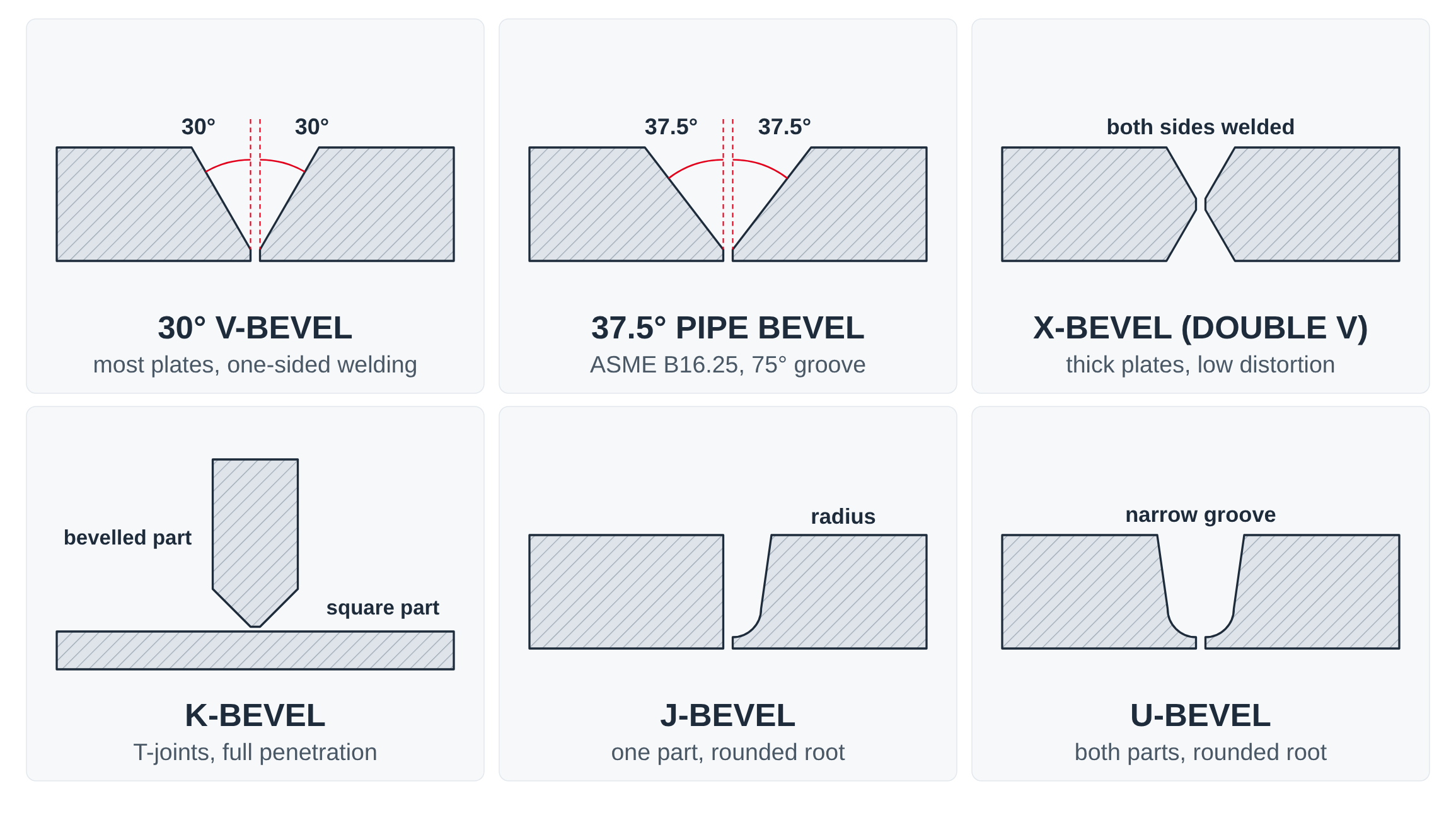
Cross-sections of the most common weld bevel types: 30° V, 37.5° pipe bevel, X, K, J and U

The most common preparations at a glance:
  • 30° V-bevel – the standard for plates welded from one side (60° groove).
  • 37.5° pipe bevel – common pipe end prep per ASME B16.25: 75° groove with a 1.6 mm root face.
  • X-bevel (double V) – thick plates welded from both sides; less weld metal, lower distortion.
  • K-bevel – double bevel on one part, typical for T-joints with full penetration.
  • J- and U-bevel – a rounded root that stays narrow on thick walls, saving filler metal and welding time.
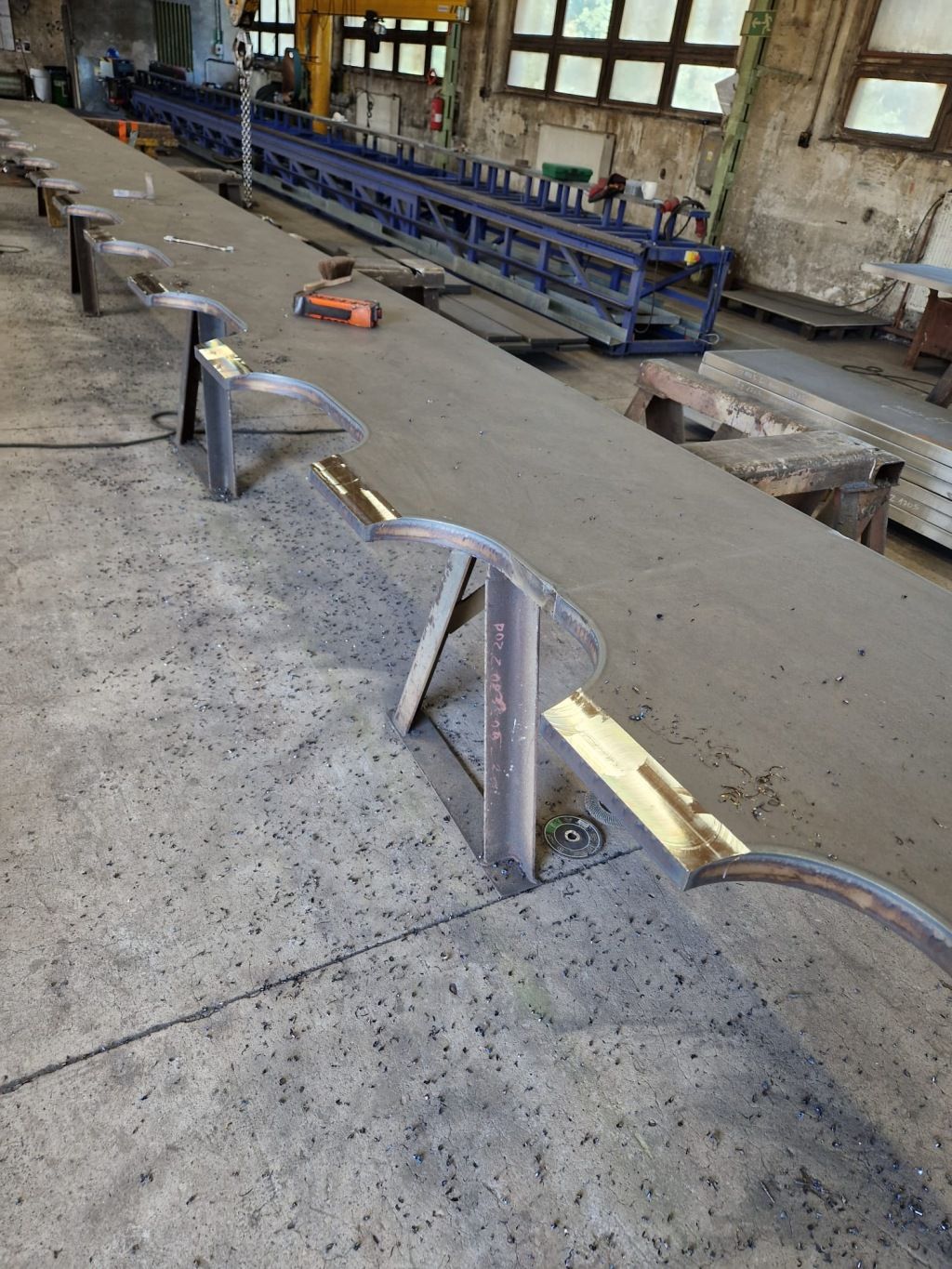
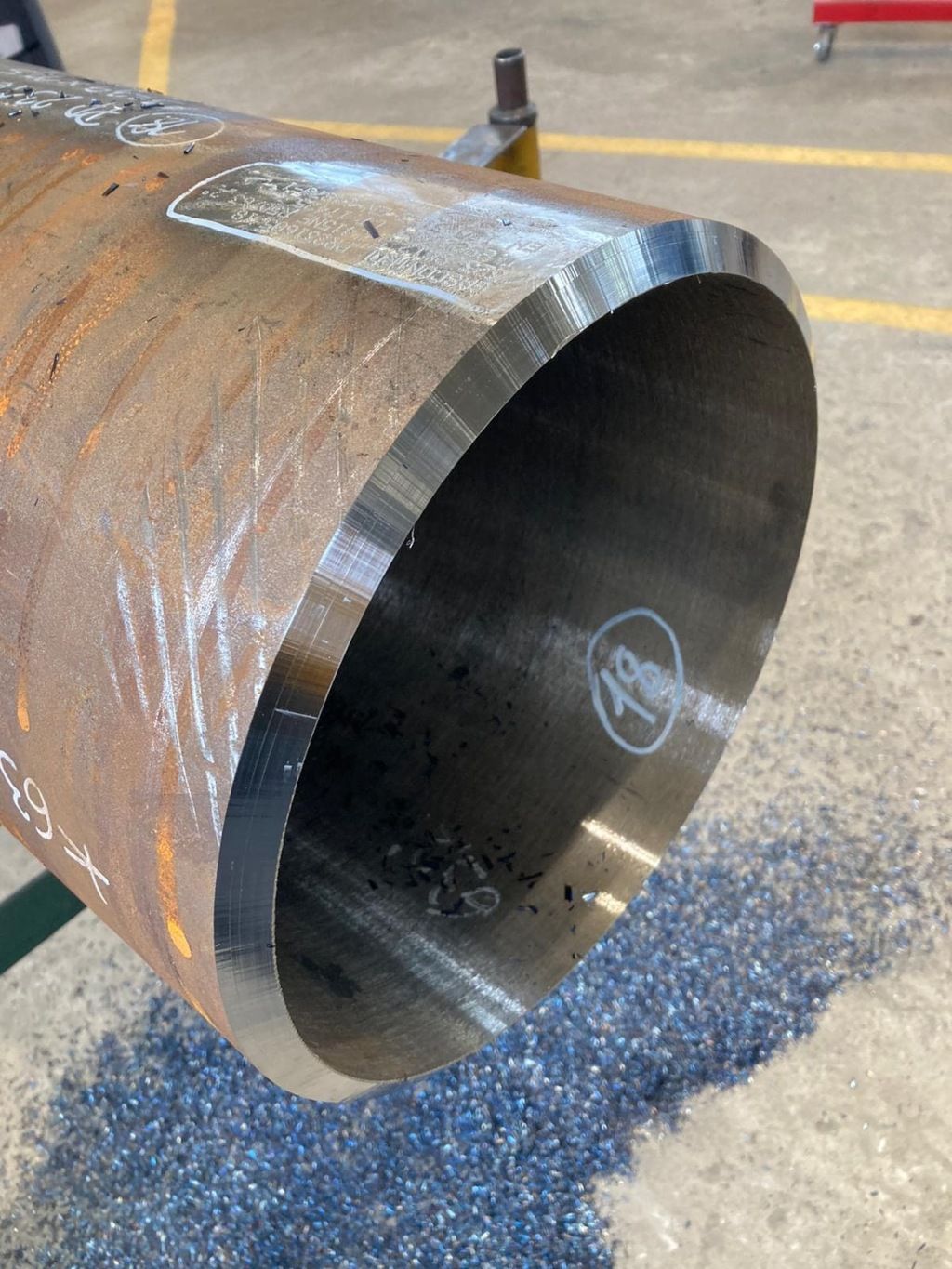
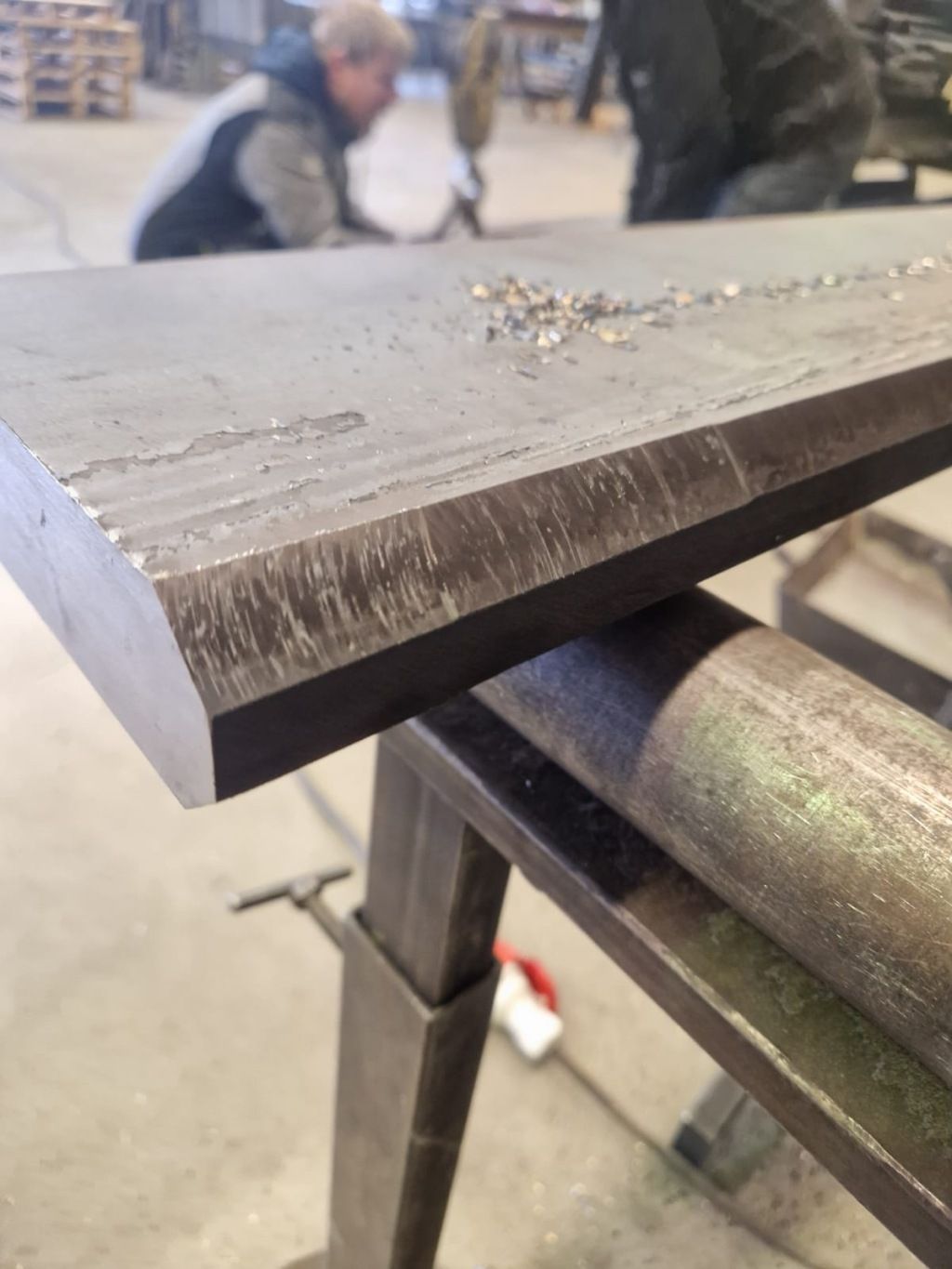
Thick steel plate with a milled weld bevel in the BEVEL workshop Bevelled steel parts on the workshop floor before welding Large pipe end with a machined weld bevel

Exact dimensions always come from your welding procedure (WPS).

Read the full guide – including milling vs. thermal cutting – on bevel.net.

Not sure which bevel your job needs? Send us your drawing and we'll recommend a machine or bevel the parts for you.